Showing posts with label writing. Show all posts

Wednesday, May 13, 2020

Idiot Appears at Shih-Da, Keeps Talking


COVID-19 notwithstanding, I was glad to be invited by Professor 蘇子中 of National Taiwan Normal University’s English Department to teach a two-hour class for their English undergrads. He wanted me to introduce my work to students, talk to them about genre, and prod them toward new ideas for writing. I gave the talk May 1, and planned to include a couple writing activities in class, of which we finished one. (No surprise there: I usually overplan.)

I’m posting my class handout, along with a few examples from the animal exercise below. Many thanks to Shih-Da for the invitation. First time teaching there.

E.M.


* * *


Playing the Genre Games


Eric Mader / 枚德林 with 蘇子中教授

My books:
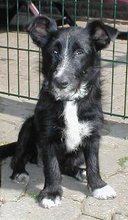
A Taipei Mutt
Idiocy, Ltd.
(Ch. tr. 2018: 白痴有限公司)
Minor Scratches

I have worked many years on short prose writing, especially a genre often called “the prose poem”. Much of my work focuses on humor, absurdity, or breaking down borders between genres. Often my work drifts into a black humor or (intentionally) idiotic ranting. Today we’ll joke around a bit, in writing, and I hope you let your weird side come forward. Try to bring out and develop whatever crazy ideas you get. 反差萌.

I. Literature: What is literature? We all have some idea of literature, and many people will say they think literature is “boring”. There are obvious reasons for that. What are these reasons? But the truth is: We all live in language (which is the stuff all literature is made of) and one of the most interesting parts of everyone’s everyday life is how language works or breaks.

The borders of “literature” are thus wider than most people think. All of us, whether we think we like literature or not, do literature when we experience particularly strong language that breaks open the world in some new way.

II. Genre: What is genre? We know about the traditional “literary genres”, but we also live in multiple “everyday genres”, and these can be very good to use as material for writing. They can be used for literary writing, and many current writers do so.

If you want to have fun with writing, the main thing is: Write it down. Use your “everyday language” and push it into new, more revealing directions. Be satirical. Have fun with it. And: Keep an archive, even if it’s just a notebook.


[Reading: “Idiots”]

III. ACTIVITY:

1) Choose an animal, an interesting one, and write the name of the animal on your activity paper.
2) Write down five or six adjectives, verbs or nouns related to that animal: what it’s like, what it normally does, etc.
3) Write down something nobody would associate with that animal.
4) Now put your animal in some place where it interacts with humans. See if you can bring in the odd element you used for #3. What can you imagine your animal doing? Or: If your animal could talk, what would it say or what would it tell humans?

[READING: “Newlyweds”]

IV. ACTIVITY:

1) List five things you think are very annoying about life in Taipei. Try to list your pet peeves. Or: Five things that annoy you about: how people behave, certain laws, certain places or companies or types of people.
2) Emperor.

V. There are many ways to make a game out of writing. Go research the group OULIPO. Here’s a simple puzzle:

頭沒頭

「兒愛聽玩三痛死以死土一洗。」洗塞的。「歪拿特兒愛特死偷瑞?」

「意持無的筆土哈兒的。歪喂死特瘦駡吃台嗎?」

「喂了,歪拿特只死特兒愛特挖特魚哈的否兒爛吃?」

「土得?」

「爺死。」

「哎哈的山為吃。」

「挖特開拿的?」

「吐拿。」

「只死特吐拿?」

「為特累特死丶頭沒頭丶恩娘死丶駡奶死。」

「玉意特兒歪特?」

「歪特。」


* * *


The pieces below were written in class. One student typed out and sent me the classroom work, the two others are from professors who attended. I post them in the order I received them. Can you tell which is the student?


PENGUIN

L. Chang

A penguin was in my bathroom this morning. I discovered this after I was woken up by the sound of something pounding on the bathroom door. When I looked into the bathroom, I saw a penguin. An angry penguin. It kept running round and crashing into things. When the penguin saw me, it started to screeching loudly right to my face. I didn’t know why it was so irritated. Maybe it was the weather. I live in Taipei City, where it is 30℃ outside during this time of the year. I tried to splash some cold water on the penguin to calm it down, but that just angered it even more. It rushed at me and knocked me down. My knees hit the floor and I even got bruised. In the end I gave up. I sat down by the penguin. Somehow it started to quiet down. We just sat by each other in silence. Then after a while I realized the penguin was not moving anymore. I checked on it and found that it was dead. Maybe it was the heat. There was nothing I could do for it. I felt sad, even though I only knew him for one day. I buried him in the park near my apartment.


RAT

T. Su

Do you think I am a close relative of Mickey Mouse? No! I hate showbiz. My talents are even more engaging and deadly. I like night. I am the Prince of all Evils. I like spreading diseases. I prefer being an invisible messenger of death to being the cute and smart Star-Chef in Ratatouille. Creating a small dish of delicacies does not interest me. I like things spectacular and on a grand scale. The Black Death is my signature work. Don't make me look cute and smart. That's not my style. I am a free soul. I like trespassing, breaking borders, messing things up, and exploring different spaces and realities. "Anyone can cook"—it’s no big deal. My motto is: Anyone can spoil the world. 


HAMSTER

J. Chang

The life of a hamster is a tragedy. To be precise, its life is a comedy for people who watch it, but a tragedy for itself, because for all the hours that it spends running on the little wheel inside its cage, it never goes anywhere. We may thus say the hamster is a tragic hero, as it has the hubris to think it could go somewhere and do something, but the reality is it will never make it. The hamster is a modern Sisyphus. Instead of forever rolling the stone uphill, it keeps jogging on the wheel. We should pay homage to the hamster!


More cowbell on 白痴有限公司

English edition: Idiocy, Ltd. Dryest humor in the west.


Tuesday, July 28, 2015

Kafka, 畢惠, and the Ghosts


畢惠 and Franz Kafka: Will these two get along?

Though I’m not at all sure she will take to such literature, I’m delighted to have convinced my young student to begin reading Kafka. She will soon begin study in one of Taiwan’s German departments. She sends me the following photo with the words: “I bought these at the book store today. There are so many books by Kafka there! Do you know his 變形記? I decided to go to Eslite book store and read 變形記 there, so I can save money. :) I will find 哲學的慰藉 tomorrow.”


Just yesterday I was rereading Harold Bloom on Kafka (in The Western Canon), who writes of the “sweetness” of Kafka’s mockery:

Everything that seems transcendent in Kafka is truly a mockery, but uncannily so; it is a mockery that emanates from a great sweetness of spirit. Although he worshiped Flaubert, Kafka possessed a much gentler sensibility than that of the creator of Emma Bovary. And yet his narratives, short and long, are almost invariably harsh in their events, tonalities, and predicaments. The dreadful is going to happen. The essence of Kafka can be conveyed in many passages, and one of them is his famous letter to the extraordinary Milena. Agonizing as Kafka’s letters frequently are, they are among the most eloquent of our century.

The passage:

It’s a long time since I wrote to you, Frau Milena, and even today I’m writing only as the result of an incident. Actually, I don’t have to apologize for my not writing, you know after all how I hate letters. All the misfortune of my life . . . derives, one could say, from letters or from the possibility of writing letters. People have hardly ever deceived me, but letters always--and as a matter of fact not only those of other people, but my own. In my case this is a special misfortune of which I won’t say more, but at the same time also a general one. The easy possibility of letter writing must--seen merely theoretically--have brought into the world a terrible disintegration of souls. It is, in fact, an intercourse with ghosts, and not only with the ghost of the recipient but also with one’s own ghost, which develops between the lines of the letter one is writing and even more so in a series of letters where one letter corroborates the other and can refer to it as a witness. How on earth did anyone get the idea that people can communicate with one another by letter! Of a distant person one can think, and of a person who is near one can catch hold--all else goes beyond human strength. Writing letters, however, means to denude oneself before the ghosts, something for which they greedily wait. Written kisses don’t reach their destination, rather they are drunk on the way by the ghosts. It is on this ample nourishment that they multiply so enormously. Humanity senses this and fights against it and in order to eliminate as far as possible the ghostly element between people and to create a natural communication, the peace of souls, it has invented the railway, the motor car, the aeroplane. But it’s no longer any good, these are evidently inventions being made at the moment of crashing. The opposing side is so much calmer and stronger; after the postal service it has invented the telegraph, the telephone, the radiograph. The ghosts won’t starve, but we will perish.

Bloom comments:

It is difficult to conceive of sentences more eloquent than “Written kisses don’t reach their destination, rather they are drunk on the way by the ghosts” or “The ghosts won’t starve, but we will perish.”

The keen awareness that in writing a letter one not only evokes a spectral other who is not the intended recipient, but rather a “ghost”, and the more writerly awareness that in penning words on paper the writer himself also inevitably becomes a disembodied voice (or voices), even when supposedly writing in his own name--these two kinds of awareness Kafka possessed to a uniquely high degree. Which is doubtless what let his writing speak; what, in many supreme examples, let the ghost voices speak their truth. Given Kafka’s more gnostic or Kabbalistic sensibility, such “inspiration” was always seen as more uncanny or demonic than in any sense holy. Thus the sharp critique of communication technologies as a tool of the “ghosts”, beginning with writing and ghoulishly progressing onto electronic forms. Probably Kafka would see in our own era of text messages and tweets and “likes” a world where the ghosts had entirely taken over, and one where their annihilating banality had finally revealed itself. (As Faust, who at the end of his joyride of unparalleled discovery and experience had finally to face the cold reality of damnation that Mephistopheles brought. But this switch of register to the Faustian or Christian is perhaps out of line, for Kafka was very Jewish, in a heretical gnostic register all his own.)

I also encouraged 畢惠 to buy some more general reading to give her a rough idea of the range of Western philosophical traditions: Alain de Botton’s The Consolations of Philosophy (Chinese title: 哲學的慰藉). Yes, I’m a bit worried she’ll like de Botton’s book more than Kafka; or, even worse, that after two years of German study she'll switch to advertising or accounting. In any case, whenever I have a student who goes into language or literary study, I always keep my fingers crossed.

加油,畢惠!

Eric Mader

(NOTE to whom it may concern: I disagree somewhat with Bloom’s reading of Kafka. It is of course brilliant on my levels, but as sometimes is the case, I find the critic insists too dogmatically (and polemically) on the monism of Jewish culture, so as to oppose it to the dualism of Christian or Cartesian culture. Bloom quotes one of the most suggestive of the aphorisms in Blue Octavo Notebooks:

If what is supposed to have been destroyed in Paradise was destructible, then it was not decisive; but if it was indestructible, then we are living in a fake belief.

Here Kafka finds, I believe, the Christian truth as given in Luke 17:20-1:

Once, on being asked by the Pharisees when the kingdom of God would come, Jesus replied, “The coming of the kingdom of God is not something that can be observed, nor will people say, ‘Here it is,’ or ‘There it is,’ because the kingdom of God is in your midst.”

Which teaching the Gospel of Thomas (saying 113) renders as follows:

His disciples said to him: “On what day will the kingdom come?” [Jesus said:] “It will not come while people watch for it; they will not say: Look, here it is, or: Look, there it is; but the kingdom of the father is spread out over the earth, and men do not see it.”

Kafka’s “fake belief” is a recognition of the same truth we find in Jesus’ teaching that the kingdom is in our midst but we “do not see it”. The first phrase of Kafka’s aphorism could be rewritten as: “If our being in Paradise [i.e. our eternal nature] was something that could be destroyed, then it was not eternal to begin with, and so there is no Paradise.” The second phrase would then be: “If, on the other hand, our eternal being was indestructible, then we still have it, and so our belief that we are not in Paradise is false.”

Of course Jesus’ teaching insists on the eternal reality of Paradise as well as on our access to it. In fact, as Luke 17 would suggest, we are already possessed of it, if only we weren’t blinded (Kafka’s “false belief”).

Saturday, May 12, 2012

Through Many Glasses Darkly

The Catholic Church is a ponderous bauble that hangs between the faithful and God. The great question is whether this multi-tiered pendant obscures our relation to God or strengthens it. I think on balance that it strengthens. The obscurity, however, is thick. Glittering, golden, to be sure, but thick.

The light, shining through panels of amber and stained glass, waxes and wanes, often simultaneously. What light one does see much depends on where one kneels. For some time now, I have been kneeling here and there, moving about.

The pages I've written over the years, almost since I began writing in fact, are covered with little more than reworked heresies, I know it. Is this because I've let myself be convinced that strong writing, by definition, is always a matter of heresy (Gk. hairesis: heresy; choosing)? Whether it is or isn't, my uncertain movement, kneeling then changing place and writing, writing while kneeling or changing place--for me it's become a crucial part of what it means to lead a life of faith.

But now I wonder: Am I, in this way, accomplishing anything for the Church? Am I accomplishing anything for Christ?

Sunday, July 26, 2009

Clay: Appendix 8: The Sacramentality of Writing

God formed man of the clay of the ground and then breathed into him the breath of life. The clay of the ground as material and the breathing in of the breath of life: these have been the focus of most concern in our literature and speculation. And the question of what the breath of life may be has been recurrent. But the question of the forming, the verb forming, hasn't raised our attention in the right way. And yet everyone knows--the Sumerians and Babylonians knew--that the pressing of marks into the clay was the crucial part of this forming. It was the pressing of marks, the right marks, that gave the clay the dignity needed for its reception of the breath of life.

The clay as result of this writing is clay that may receive the breath of life if only this breath be given it.

It is in this sense originally that writing is a sacrament.

Saturday, July 25, 2009

Clay: Appendix 9: Inédit

Adam was a short beast, with a thin line of hair down his back, like a mane. Eve had a thin line of hair down her back; it was like a mane.

In those days, when you came into town, a stranger, you could always recognize Adam and Eve, because they were the only ones without navels.

The first writing was by Cain, who started by drawing pictures on his parents' bellies. Their bellies were smooth, and had no navels. Cain would ask them to lie back by the fire, and close their eyes, and he would draw. When he was done, they would open their eyes and look at what he had drawn.

Once Cain drew an unheard of thing. It was such a thing, that when God saw it, he let it stay on Eve's belly as punishment. God punished Eve for the evil sport she had fallen into. It could not be washed away, but stayed on Eve's belly. For they had fallen into an evil sport.